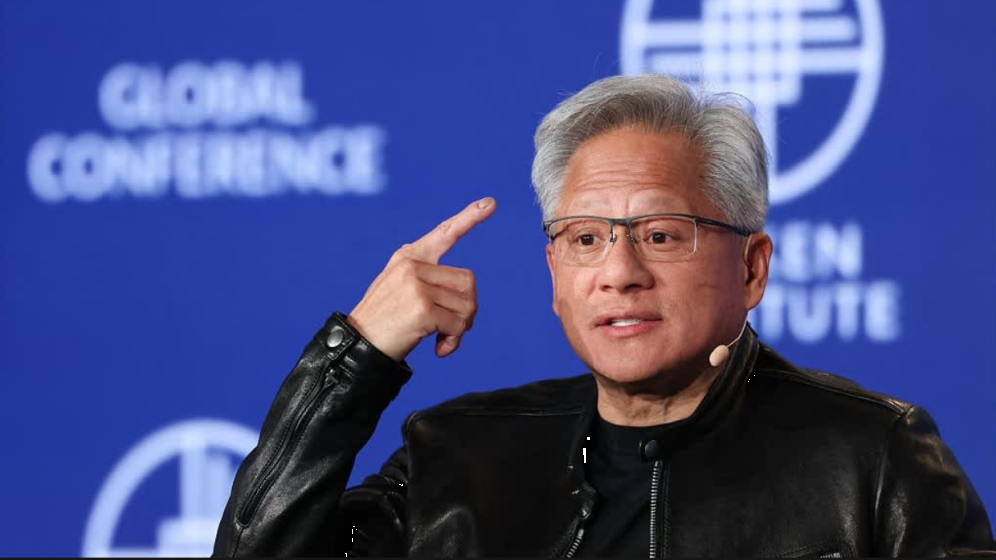
Reading Time : 2 minutesNvidia’s Jensen Huang sees cybersecurity as artificial intelligence’s next major market, dismissing existential fears as overblown. He predicts trillion-dollar AI infrastructure spending by 2030 and points to new industry partnerships as proof that automated defense will drive the next wave of growth.
Reading Time : 2 minutesThis article examines Jensen Huang’s claim that academic fields matter less in an AI driven world. It explores how jobs are breaking into tasks, why creativity and storytelling may gain value, and how AI could redefine competition. Rather than replacing workers entirely, AI may reward those who adapt fastest and use it most effectively.
Reading Time : 2 minutesThe U.S. has decided to let Nvidia sell its H200 AI chips to selected customers in China, reopening part of a market that was blocked by earlier export controls. Washington will take a share of the revenue, while China gains access to hardware it struggled to replace. The move reshapes commercial, political, and technological dynamics across the Pacific.
Reading Time : 2 minutesJensen Huang made a quick visit to Taiwan, stopping at TSMC’s advanced chip facilities and reaffirming the close partnership between the two companies. The visit lasted less than a day but carried strong symbolic weight. It highlighted the growing demand for AI hardware and the strategic role Taiwan plays in enabling next-generation computing.
Reading Time : 2 minutesNVIDIA is partnering with South Korea’s government, Samsung, SK, and Hyundai to deploy over 260,000 GPUs. The massive rollout aims to establish the country as a global AI hub, developing cloud systems, robotics, and autonomous technology, while also signaling major geopolitical and industrial shifts in Asia’s AI infrastructure.
Reading Time : 2 minutesNvidia’s CEO Jensen Huang confirmed a significant investment in Elon Musk’s xAI, calling it a move he wishes he’d gone even bigger on. The partnership deepens ties between the chip giant and Musk’s ambitious AI venture, highlighting Nvidia’s growing influence in shaping the AI ecosystem — and raising eyebrows over circular financing risks.
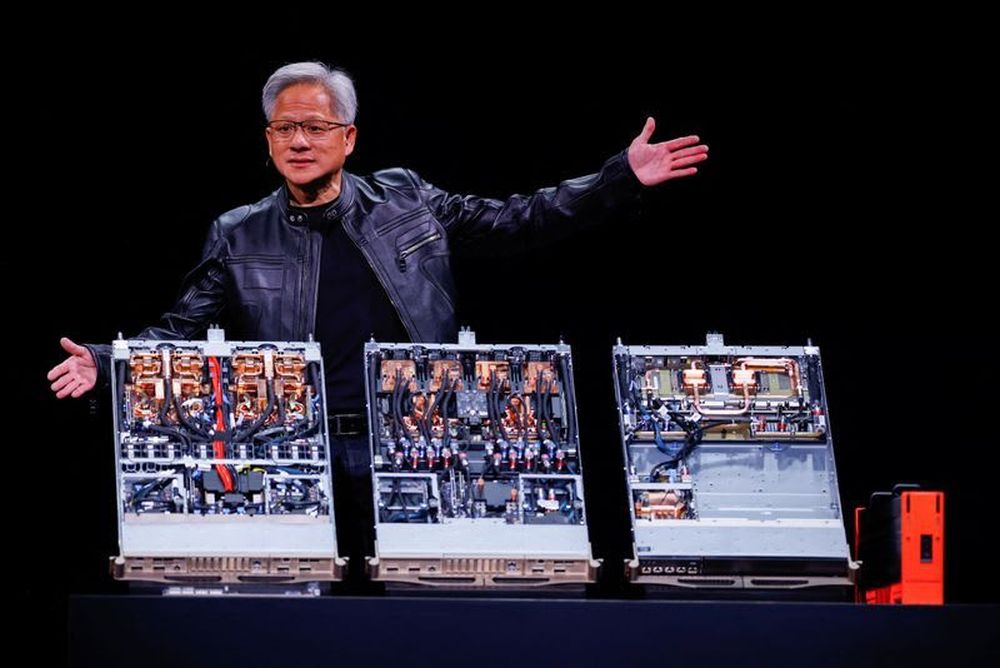
Reading Time : 2 minutesNVIDIA’s Project Digits, a compact AI supercomputer, brings high-end computing to your desk. Priced at $3,000, it can handle massive AI models, empowering researchers and students. Launching in May 2025, it’s a game-changer for personal AI development.