
TSMC’s latest financial disclosures show that governments in the United States, Japan, Germany and China together provided NT$167.586 billion, about US$5.10 billion, in subsidies during the first nine months of 2026. The scale is striking, but the timing is even more revealing. Nearly the entire amount, NT$166.996 billion, arrived in the July-to-September quarter, while the company recorded only NT$590 million in the first half of the year. That sudden concentration suggests that major construction, equipment purchases and production milestones across several overseas sites reached a point where public support could be recognized or disbursed.

The money was directed to TSMC’s local manufacturing entities: TSMC Arizona in the United States, European Semiconductor Manufacturing Co. in Dresden, Japan Advanced Semiconductor Manufacturing in Kumamoto, and TSMC Nanjing in China. The company says the grants mainly offset spending on property, plants and equipment, with some support covering construction and operating costs. Yet the disclosures do not say how much each government contributed, which subsidiary received the largest share, or why the payments clustered so heavily in one quarter. Those omissions make it difficult to judge whether the aid reflects routine reimbursement, accelerated project delivery, or a broader industrial-policy push.
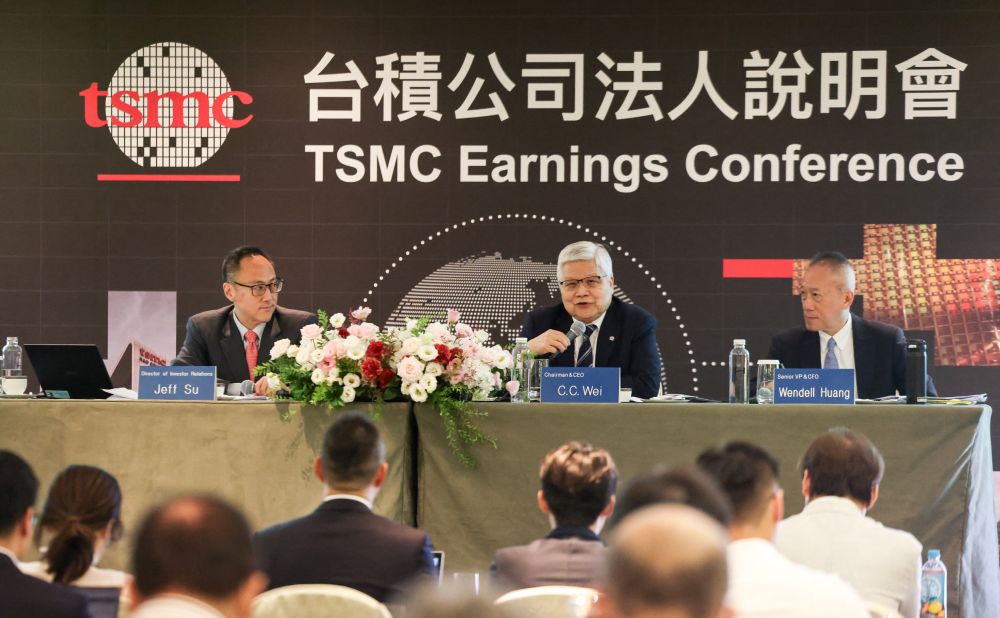
Arizona is the clearest success story. Its subsidiary earned NT$53.986 billion in the first nine months, more than ten times the NT$4.769 billion recorded a year earlier, while JASM in Japan earned NT$2.396 billion. ESMC in Dresden, by contrast, remained unprofitable, reporting a loss of NT$1.079 billion. But Arizona’s result should be read carefully: it is the subsidiary’s own profit, and its revenue depends partly on wafer prices charged within TSMC’s own corporate structure. A profitable Arizona plant is therefore evidence of progress, but not proof that manufacturing in the United States is independently cost competitive.
The broader question is what these subsidies are buying. TSMC’s first Arizona fab began commercial 4-nanometer production in late 2024, while a second fab has completed construction and is receiving equipment ahead of planned 3-nanometer mass production in 2027. Japan’s second Kumamoto facility is slated for production in 2028, and Dresden is expected to begin output in 2027. Governments are clearly paying to accelerate capacity, secure supply and bring advanced chipmaking closer to home. The unresolved issue is whether taxpayers are receiving durable strategic capacity, or helping fund a global expansion whose economics still depend heavily on TSMC’s Taiwan-based operations.

#TSMC #Semiconductors #Arizona #CHIPSAct #SupplyChain #ChipManufacturing #GlobalExpansion #TaiwanTech