
A widespread Microsoft outage disrupted Outlook, Teams, and other cloud services for hours, leaving users unable to access email or communicate normally. The company traced the disruption to unexpectedly unavailable servers that overloaded the remaining infrastructure. As engineers paused updates, rerouted traffic, and restarted systems, recovery came in stages, raising questions about resilience across essential digital services.

The first signs appeared when thousands of users began reporting that Outlook would not load, messages would not send, and mailboxes seemed unreachable. Reports quickly expanded beyond email as Teams, video calling, and other Microsoft 365 services showed similar problems. For many organizations, the outage was not merely an inconvenience. It interrupted daily work, delayed communications, and exposed how dependent modern workplaces remain on a small number of cloud platforms.
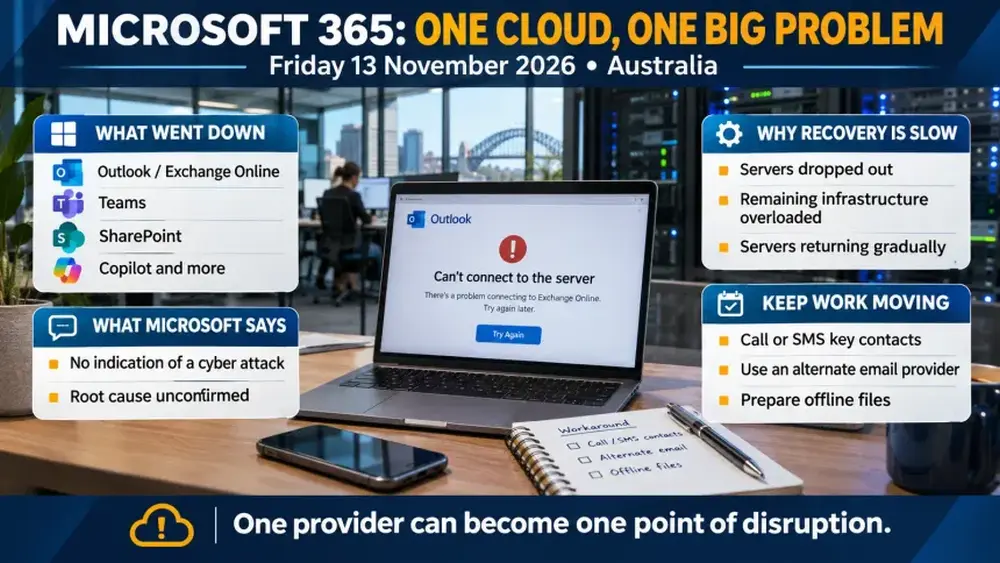
Microsoft’s investigation pointed to an unexpected failure involving servers that provide secure connections. When those systems became unavailable, the remaining infrastructure absorbed an unusually heavy load. Engineers paused software deployments, shifted traffic away from affected systems, and restarted servers. Yet as traffic returned, some restored machines became unresponsive again, suggesting that the disruption was more complex than a single, easily isolated failure.

The company reported partial recovery, but users continued to experience inconsistent access as engineers worked through the night. Teams was restored earlier than Outlook and Exchange Online, while email services remained a major concern. The episode underscores a broader question: when a core provider experiences a cascading failure, how quickly can critical communication tools recover, and what safeguards can prevent a temporary fault from becoming a global disruption?

#MicrosoftOutage #OutlookDown #Microsoft365 #TeamsOutage #CloudComputing #TechNews #DigitalResilience #ExchangeOnline