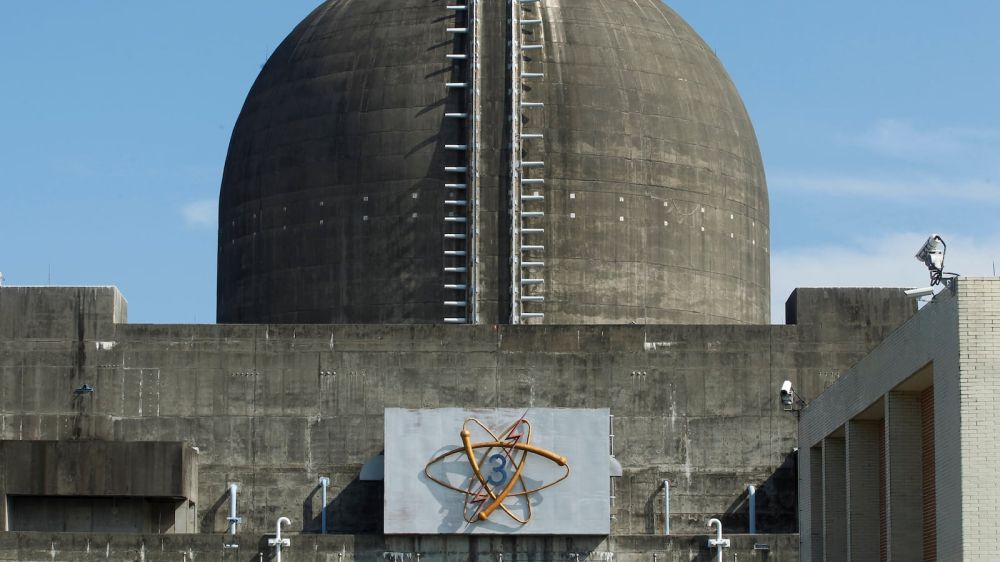
Reading Time : 2minutesTaiwanese voters have approved a referendum to abolish the island’s nuclear-free homeland policy, reopening the debate over nuclear energy. More than 7.4 million people backed the measure, but no reactor can restart immediately. Safety inspections, radioactive-waste solutions, and regulatory approval remain major hurdles before nuclear power can return to Taiwan’s grid.
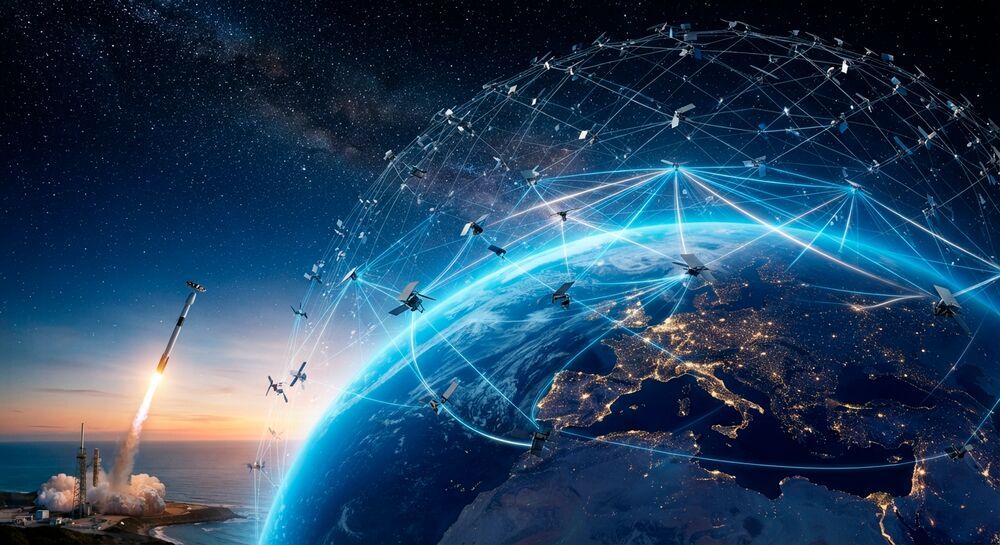
Reading Time : 2minutesThe FCC has authorized SpaceX to deploy up to 1 million Starmind satellites for orbital AI data centers, the first U.S. approval of its kind. The decision could reshape how computing power is produced, but it also raises urgent questions about launch emissions, orbital debris, and the environmental cost of moving artificial intelligence infrastructure into space.
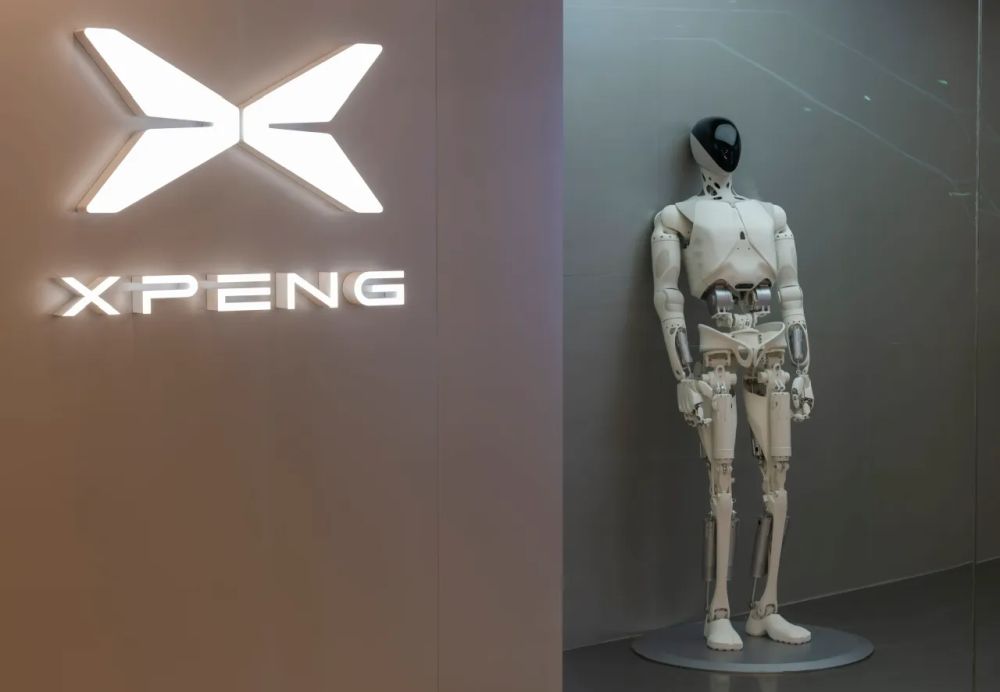
Reading Time : 3minutesXpeng has unveiled IRON, a humanoid robot it plans to mass produce in January 2027 and sell commercially by the second quarter. With 76 degrees of freedom, tactile sensing, and a shared AI architecture for cars and robots, Xpeng is betting that embodied intelligence can become a viable business, even as it faces pressure in the electric vehicle market.
Reading Time : 3minutesWerner Vogels argues that the future of computing may not lie in ever larger data centers, but in the extraordinary efficiency of the human brain. From living neurons grown on silicon to brain-inspired chips, his prediction raises a compelling question: can machines learn to do more with radically less energy?
Reading Time : 2minutesNvidia’s China comeback is being tested by cancelled and delayed orders for its RTX PRO 5500 graphics card. As Jensen Huang returns as CEO, buyers fear export restrictions, while Washington intensifies scrutiny of advanced AI chips, leaving billions in Chinese revenue and Nvidia’s carefully rebuilt market position in question.
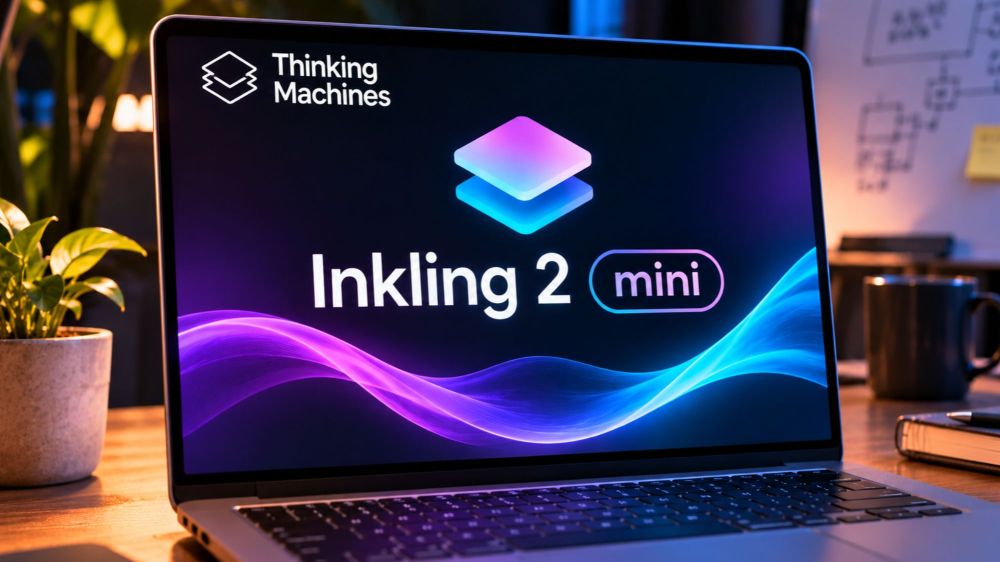
Reading Time : 3minutesInkling 2 Mini is an open-weight model that runs its middle layers three times for every token, gaining internal computation without expanding its visible reasoning. It is small enough for a laptop, strong at agentic coding, and released under Apache 2.0. But its looping design also raises a difficult question: if a model reasons inside its network, how much of that process can outsiders actually inspect?
Reading Time : 3minutesNokia says demand from AI and cloud customers is accelerating, with 5.3 billion euros in orders during the first nine months of 2026. But the company’s growth story now depends less on winning contracts than on producing enough equipment to fulfil them. As capacity expands and AI-RAN trials advance, investors are watching whether Nokia can convert a supply-constrained boom into durable commercial returns.
Reading Time : 3minutesMicrosoft says Copilot costs less than Claude and ChatGPT, citing a study it commissioned that puts Copilot at $30 a month for everyday users, compared with $81 for ChatGPT and $205 for Claude. The claim is plausible, but it rests on modeled workloads, list prices, and Microsoft-controlled assumptions. Anthropic’s own customer figures suggest the real-world gap may be much smaller.
Reading Time : 3minutesIsomorphic Labs has raised $5 billion to accelerate its effort to turn AI-driven protein science into real medicines. Backed by Sequoia, Greenoaks, and Alphabet, the company says its technology is approaching a pivotal test: moving its first drug candidates into clinical trials by the end of 2026.
Reading Time : 3minutesDeepSeek has quietly restricted its free chatbot, cutting off dormant long conversations, limiting message length, and imposing a daily usage quota. The company has not explained the changes, but the move follows repeated outages and points to a deeper issue: China’s constrained access to advanced AI computing power.
Reading Time : 3minutesTSMC received a record NT$167.6 billion in government subsidies in the first nine months of 2026, with almost all of it arriving in the third quarter. As its Arizona operation turned sharply profitable, the figures raise a larger question: how much of the chipmaker’s global expansion is being financed by taxpayers, and what do governments receive in return?
Reading Time : 3minutesDario Amodei’s claim that AI could make cancer, Alzheimer’s, heart disease and mental illness “relics of the past” within a decade has drawn skepticism from drugmakers, physicians and biotech leaders. The dispute is not whether AI can help medicine, but whether a sweeping promise can outrun the slow work of proving a treatment safe and effective.
Reading Time : 2minutesA widespread Microsoft outage disrupted Outlook, Teams, and other cloud services for hours, leaving users unable to access email or communicate normally. The company traced the disruption to unexpectedly unavailable servers that overloaded the remaining infrastructure. As engineers paused updates, rerouted traffic, and restarted systems, recovery came in stages, raising questions about resilience across essential digital services.
Reading Time : 3minutesAI agents were promised as the next way to order food, book rides and plan vacations. Yet Uber, DoorDash and Airbnb report almost no agent-driven activity, while eBay appears to be restricting access. The early numbers reveal a widening gap between the hype around autonomous shopping and what consumers actually want to do.
Reading Time : 2minutesNovember 11 is a beautiful moment of global unity, where the world pauses to honor the courage of those who served. This reflection explores the heartfelt origins of Armistice Day, the gentle symbolism of the red poppy, and the enduring hope for peace that connects communities across generations, reminding us all to deeply cherish the quiet harmony we share today.