
Buterin’s intervention lands at a moment when the politics of AI infrastructure have suddenly become harder to ignore. In a post on X on Sunday, Nov. 8, he said he disagreed with the strong emotional reaction against anti-data-center movements, according to crypto.news. His argument was not that artificial intelligence should stop, but that the pace of construction may be outrunning what the technology actually requires. He suggested that capabilities expected to require larger data centers two years from now could instead be achieved with today’s facilities in roughly four years, or sooner, as algorithms improve.

The Ethereum co-founder framed the issue as a question of risk management rather than opposition to progress. A slower expansion, he wrote, would give the world more time to confront cybersecurity threats that have already emerged and potential biosecurity risks that could follow. He also argued that scientific progress depends on more than computing power, so delaying AI by a year would not delay science by the same amount. Notably, he did not call for shutting down existing facilities or endorse a specific government ban. His position was narrower: that slowing the rush to build could be net beneficial.
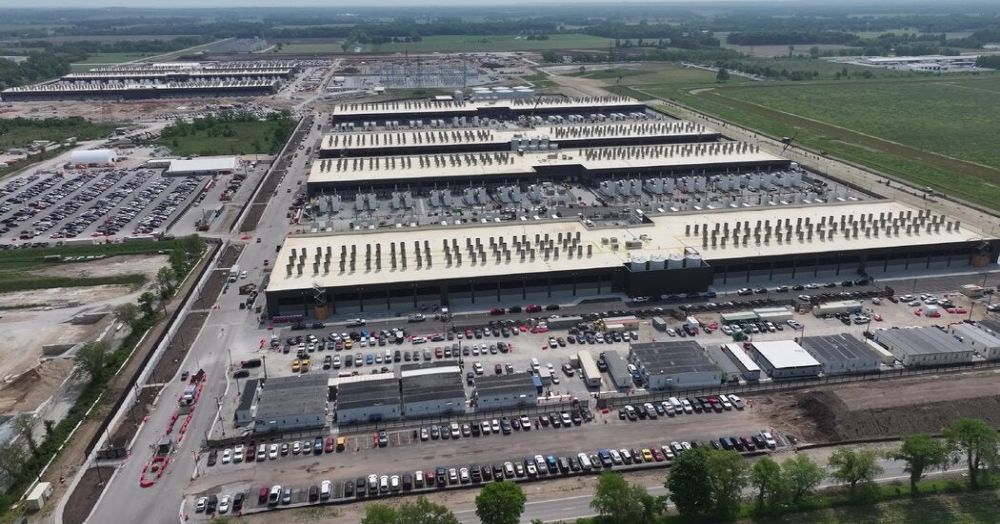
The remarks arrived days after U.S. midterm elections turned data center opposition into a visible political force. Candidates who promised moratoriums won governor’s races in Texas, Ohio and Georgia, and Morgan Stanley said the results raised expectations for restrictions on new development. Texas, the world’s second-largest data center market with 6.5 gigawatts under construction, became the central test case. Gina Hinojosa, who won the Texas governor’s race, told CNN that the state should pause new projects until protections are in place.

That political shift collides with a major pivot in the crypto mining industry. Riot Platforms said on Nov. 4 that it had signed a 15-year lease for 910 megawatts at its Corsicana, Texas site, with about $28 billion in expected revenue. The company sold 20,264 Bitcoin in the first nine months of 2026, largely to fund data center development. For miners, the wager is clear: AI demand will justify enormous new capacity. Buterin’s argument challenges that wager at its foundation, suggesting the industry may be building for a future that better software, not more concrete and power lines, could deliver.

#VitalikButerin #AI #DataCenters #Crypto #Bitcoin #RiotPlatforms #Texas #Ethereum #TechPolicy #ArtificialIntelligence