
The Federal Communications Commission has authorized SpaceX to deploy up to 1 million satellites for its proposed Starmind constellation, a network of orbital compute modules designed to process large volumes of data for use on Earth. The approval marks the first U.S. regulatory authorization for a space-based computing constellation and clears SpaceX to establish the system using optical inter-satellite links, with radiofrequency communications in the 18.8 to 19.3 GHz downlink and 28.6 to 29.1 GHz uplink bands reserved for emergency telemetry, tracking, and command. The FCC said the system must operate consistently with its orbital debris rules, while Chairman Brendan Carr described the decision as opening a new frontier for computing infrastructure and uniting American strengths in space and advanced technology.

The authorization comes as terrestrial data centers face growing local opposition over electricity consumption, land use, and the environmental demands of large-scale AI infrastructure. SpaceX executives have told investors that the company aims to launch initial orbital AI computing demonstrations by late 2027, with a broader deployment potentially beginning as early as 2028. The plan would move compute capacity beyond the constraints of ground-based facilities, using solar power and satellite networks to support the expanding appetite for artificial intelligence processing.

The scale of the proposed constellation has drawn immediate scrutiny from scientists and environmental advocates. A preprint analysis by researchers at University College London estimated that launching and maintaining a million-satellite orbital data center network could increase rocket launch emissions more than 150-fold compared with 2025 levels. The same analysis warned that the effort could raise upper-atmosphere nitrogen oxide pollution, concerns that have become more prominent after the FCC exempted satellite megaconstellation filings from environmental review in September 2026.
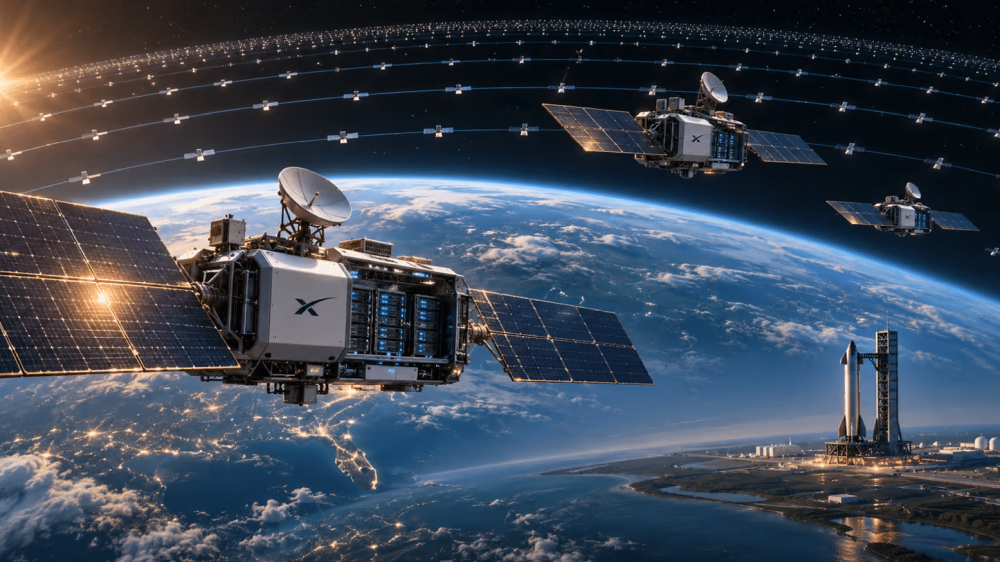
As SpaceX prepares to move forward with Starmind, the decision highlights a widening tension between expanding AI computing infrastructure beyond Earth and assessing the cumulative atmospheric effects of launching and disposing of vast satellite fleets. The approval gives SpaceX a regulatory path toward an unprecedented orbital computing network, but it also places the environmental consequences of that ambition under closer public examination.

#SpaceX #FCC #Starmind #OrbitalDataCenters #SpaceDataCenters #AIInfrastructure #ArtificialIntelligence #Satellites #SpaceTechnology #OrbitalComputing #SpacePolicy #TechNews