
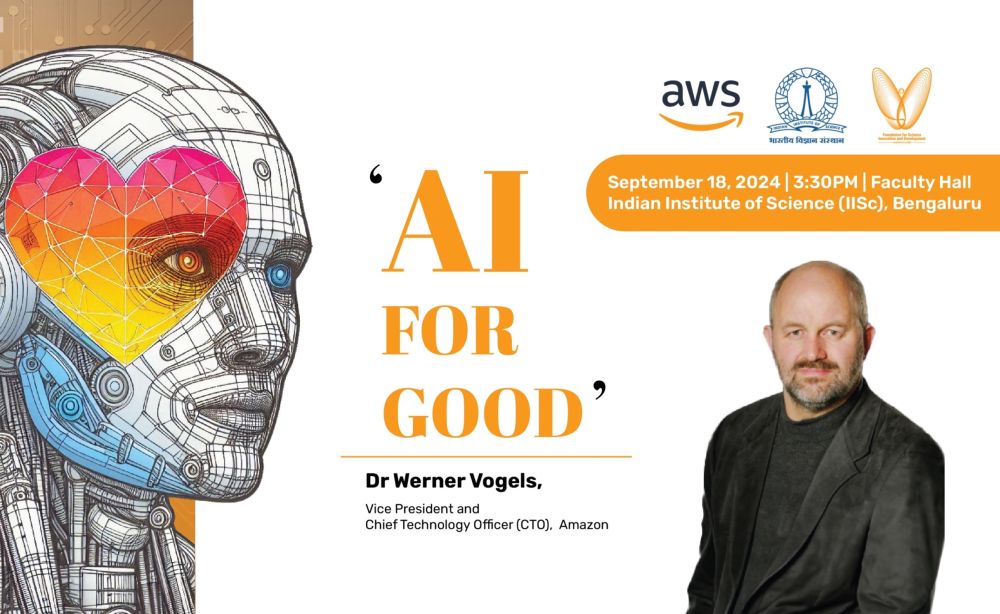
Werner Vogels, Amazon’s chief technology officer, has made a prediction that sounds less like a product roadmap and more like a challenge to the entire technology industry: the next major breakthrough in computing may come from biology. In his view, the systems that power artificial intelligence are becoming too energy hungry, too centralized, and too dependent on vast amounts of hardware. The human brain, by contrast, performs extraordinarily complex work while consuming only about 20 watts of power. That contrast has become the starting point for a deeper question about how machines should be built.
Vogels points to research that grows living human neurons on silicon chips. These biological systems can learn through trial and error, adapting in ways that conventional software does not. One such system, built around roughly 200,000 neurons, can operate on 25 to 30 watts, while a full rack of such machines may use less than 1,000 watts. A comparable rack of high-end graphics processors can require more than 600 kilowatts. The difference is striking, but it also raises an important question: can a technology inspired by living tissue become reliable, scalable, and practical outside the laboratory?
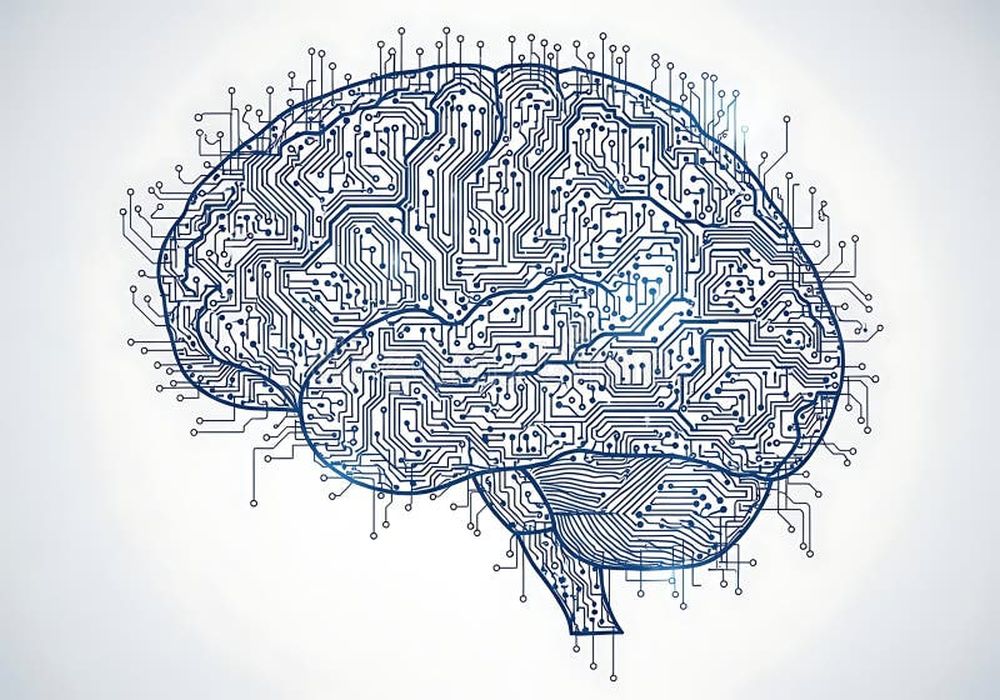
The idea is not limited to neurons grown in dishes. Vogels also highlights neuromorphic chips, which are designed to process and store information in the same physical location, much as the brain does. These chips may learn from experience rather than simply following fixed instructions. In theory, such a system could sit inside an ordinary object, such as a car tire, and gradually learn how its owner drives. If successful, it could reduce the need to send every piece of data to a distant data center, allowing intelligence to exist closer to where it is needed.
The implications extend well beyond faster computers. Lower-power systems could make advanced computing more accessible in rural hospitals, schools, and farms, where electricity and reliable network connections are often limited. Vogels frames this as a form of democratization, but the promise comes with caveats. The biological systems described remain early and small in scale, while security, ethics, and control become more urgent as computing moves closer to human biology. His forecast is optimistic, yet it leaves open the question of whether technology can truly borrow the brain’s efficiency without inheriting its complexity.

#AI #Computing #Biology #Neuromorphic #BrainComputerInterface #Technology #Innovation #FutureOfWork #EnergyEfficiency #WernerVogels