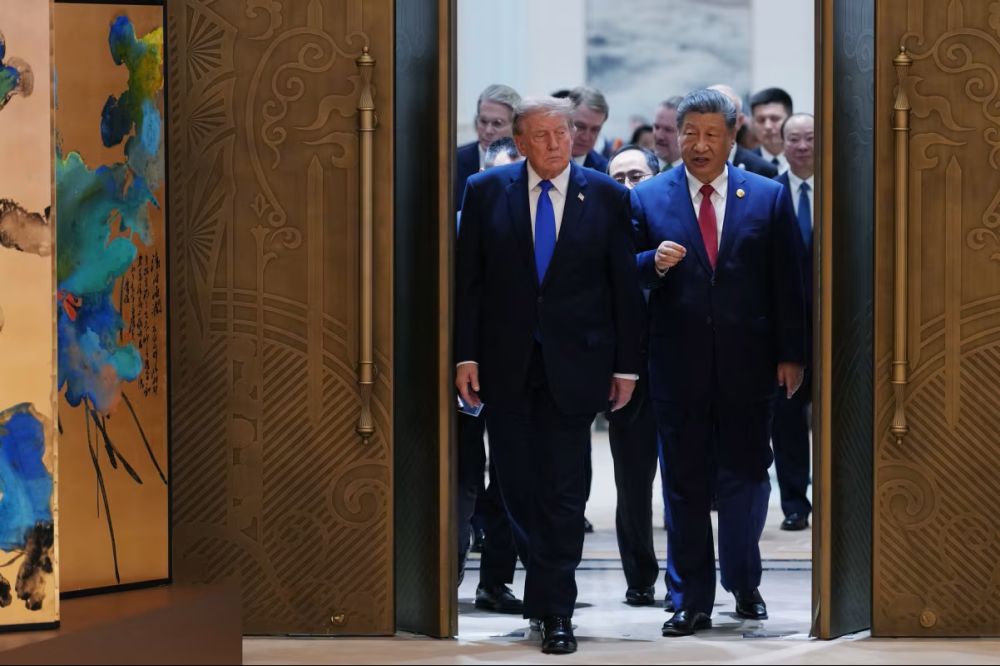
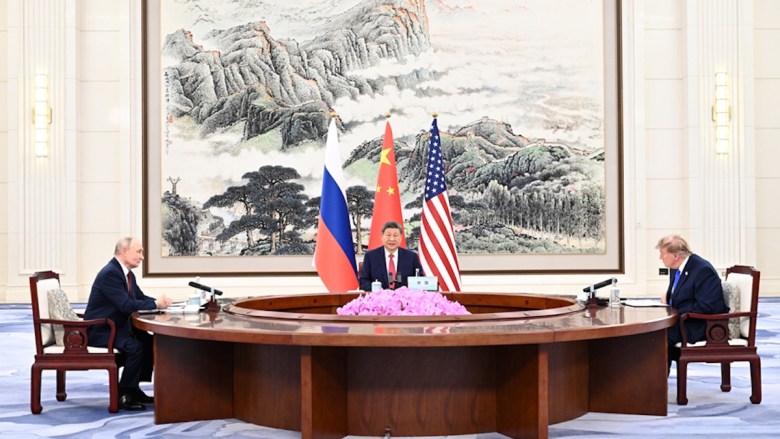
The setting was deliberately symbolic. Shenzhen, with its gleaming towers, laboratories, and manufacturing ecosystem, offered China a stage to present itself as a rising technological power rather than a country merely trying to catch up. When Donald Trump and Xi Jinping met there during the APEC summit, both leaders spoke about artificial intelligence as a field where cooperation could benefit the world. The language was polished, forward-looking, and unusually conciliatory for two governments whose relationship has been shaped by tariffs, export controls, and mutual suspicion.
But the friendly tone obscured a more uncomfortable reality. Just before Trump arrived in China, the United States announced new licensing requirements designed to further limit Beijing’s access to advanced American semiconductors. Those chips are not ordinary commercial products. They sit at the center of artificial intelligence, military modernization, cloud computing, and the industrial systems that increasingly determine national power. Washington’s message was clear: it may be willing to talk, but it does not intend to surrender its technological advantage.
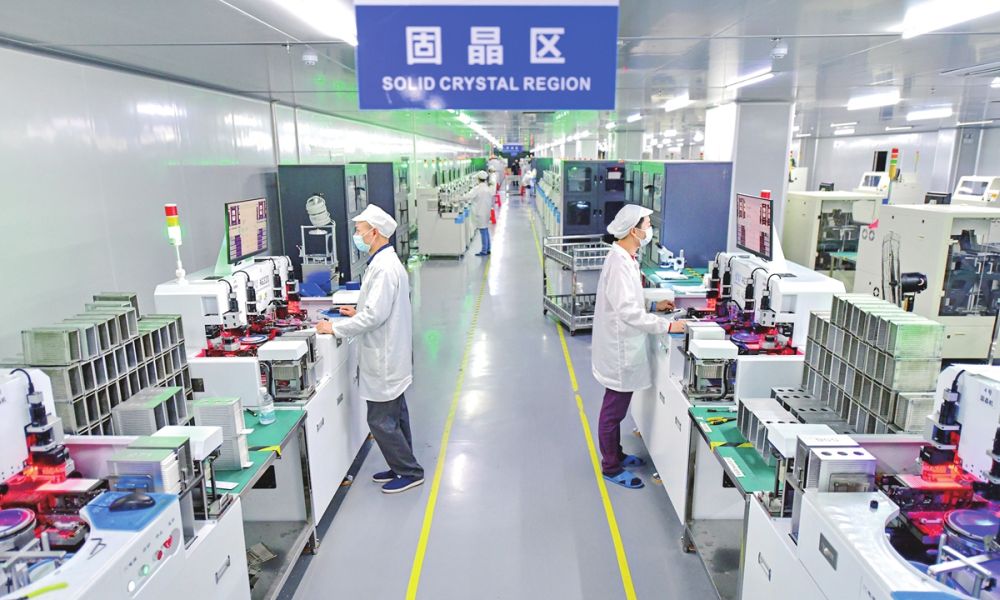
China, meanwhile, has spent years trying to reduce its dependence on foreign suppliers. Its domestic chip industry has made progress, yet advanced computing remains a difficult area where American firms retain significant influence. This creates an uneasy dependency. Beijing wants the world to see China as self-reliant and innovative, but many of its companies still need access to sophisticated foreign technology. For Washington, that dependence is leverage. For Beijing, it is a vulnerability that must eventually be eliminated.
The controversy surrounding Nvidia added another layer of tension. Reports alleging that Jensen Huang had been targeted in a Chinese intelligence operation intensified concerns that sensitive American technology could be compromised. The episode reportedly contributed to Huang stepping down as Nvidia’s chief executive and raised fresh questions about whether export restrictions can truly protect strategic technology. Trump acknowledged that Nvidia had come up during his discussions with Xi, but the summit ended without a visible resolution.
That may be the most revealing outcome of all. The leaders could agree on the value of dialogue, the promise of artificial intelligence, and the importance of avoiding escalation. What they could not resolve was the underlying competition: who controls the chips, who sets the rules of the AI economy, and whose technological ecosystem will shape the future. In Shenzhen, cooperation was the message. Competition was the reality.

#USChina #APEC #ArtificialIntelligence #Semiconductors #TechRivalry #Nvidia #Geopolitics #Shenzhen