
Xpeng has unveiled IRON, a general-purpose humanoid robot designed to move from the company’s showrooms into commercial service within months. The announcement, made at Xpeng’s eighth AI Day in Guangzhou, puts hardware mass production on course for January 2027, with the robot scheduled to begin working as a store assistant in the first quarter and reach external commercial customers in the second quarter. The timing is striking: Xpeng is attempting to turn a highly visible robotics demonstration into a real product line while its core electric vehicle business faces mounting competitive pressure.
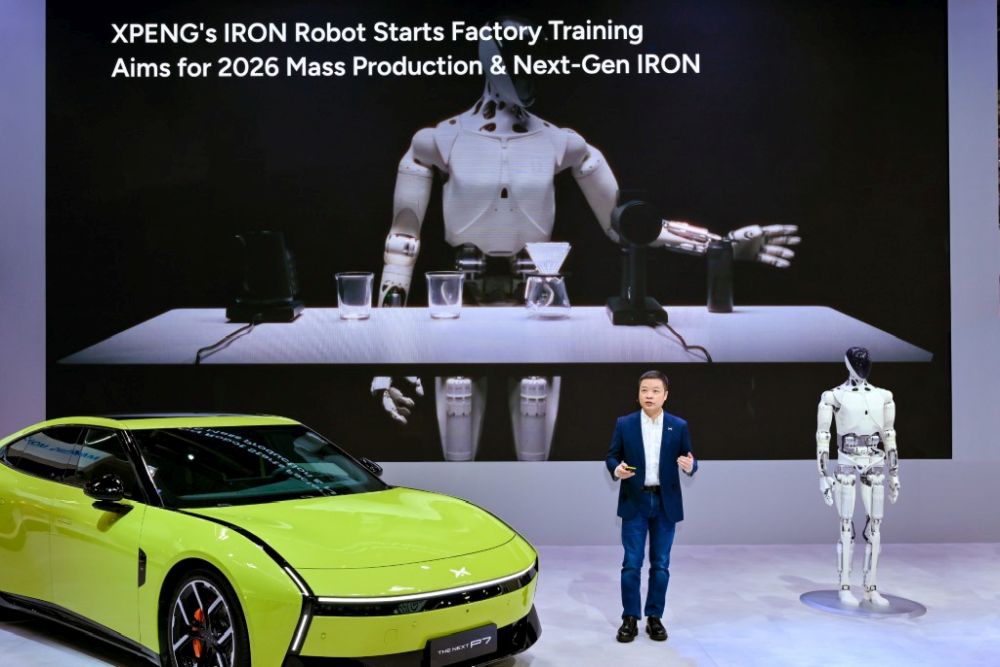
The question is whether IRON can deliver enough practical value to justify the company’s confidence. The robot stands 170 centimeters tall, weighs 62 kilograms, and has 76 degrees of freedom, including 21 in each hand. It carries more than 1,500 tactile sensing points across over 80% of its key body areas, a feature intended to help it sense contact and operate more safely around people. Three proprietary Turing AI chips provide up to 2,250 TOPS of onboard compute, which Xpeng says enables whole-body control without human remote operation. Onstage, IRON walked, responded in Chinese and English, and returned to its charging station, although a 20-minute charge currently supports only about 1.5 hours of work.
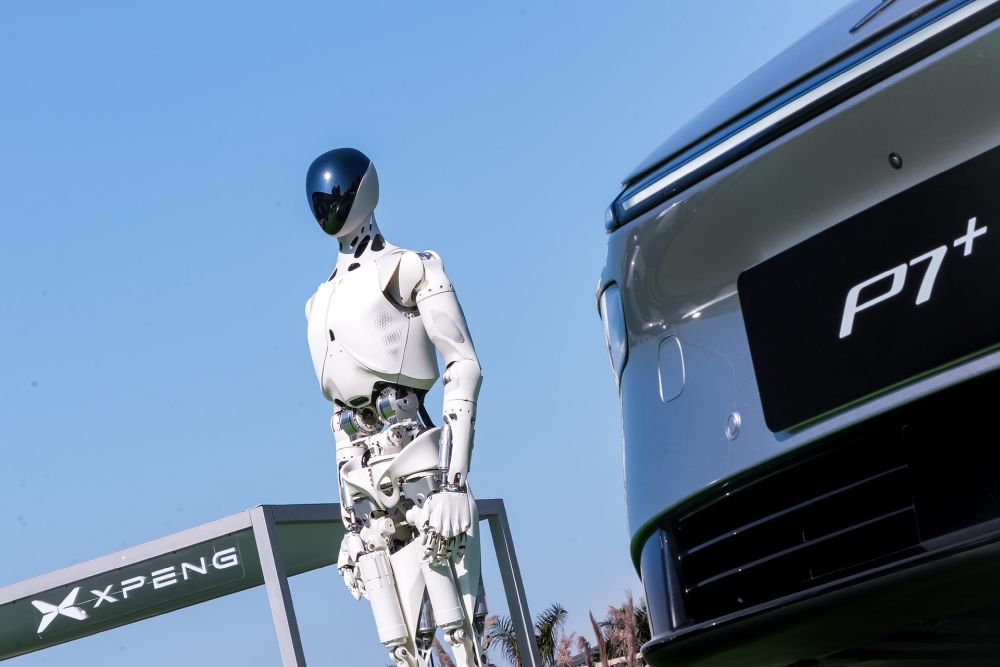
What may matter more than the robot’s physical specifications is the shared intelligence system behind it. Xpeng calls it the Turing Physical AI Architecture, or VLA 3.0, and says it connects higher-level cognition, real-time decision-making, and physical execution in a continuous loop. The same architecture is intended to run across Xpeng’s vehicles and robots, meaning advances in autonomous driving, environmental perception, and embodied control could feed into both product lines. Chief Executive He Xiaopeng has framed the approach as a bet that intelligence and hardware must evolve together, rather than treating robotics as a separate software experiment.
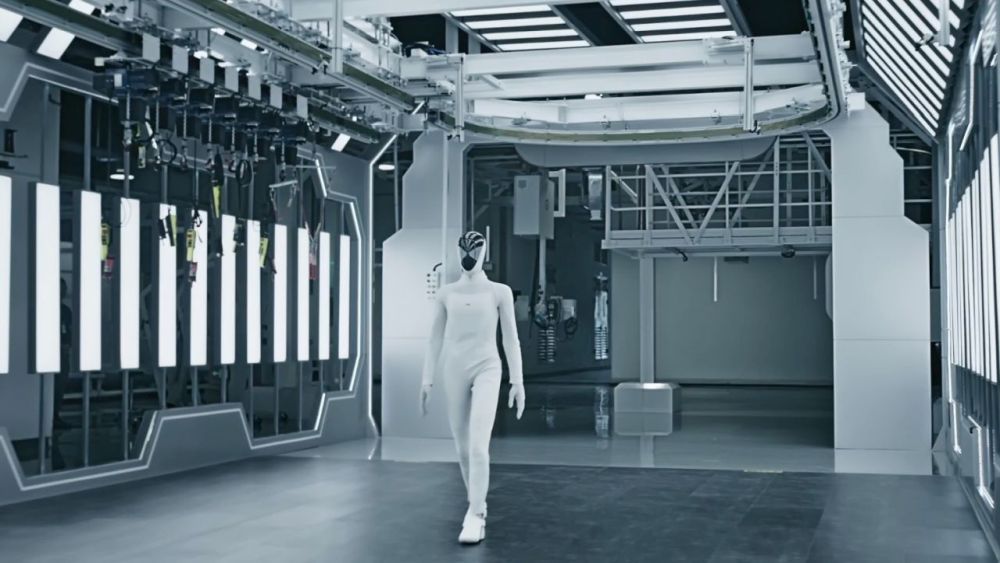
The commercial plan is ambitious, but it remains unproven. Xpeng has built a 50,000-square-meter Robot Data Factory covering more than 250 scenarios and 15 job categories, and says its automated assembly line can complete one robot every 2.5 minutes at full capacity. Vice Chairman Brian Gu has suggested pricing could land near the median selling price of an electric vehicle, although Xpeng has not disclosed a figure. The company plans to combine hardware sales, software subscriptions, and an open ecosystem for third-party skills, while household use is expected to follow commercial deployment by one to two years. Whether customers will pay for a humanoid assistant, and whether IRON can perform reliably outside a controlled stage, will determine whether this is a genuine product launch or another expensive promise in a crowded robotics race.

#Xpeng #IRON #HumanoidRobot #PhysicalAI #Robotics #AI #TuringAI #VLA3 #Automation #EV #ChinaTech #FutureOfWork