
Jensen Huang has made a striking claim: Nvidia GPUs may remain economically useful for eight years or longer, rather than the four-year replacement cycle many investors and lenders have assumed. His argument is not simply that the chips keep running. It is that long-lived, versatile compute could become a financeable asset, allowing lenders to underwrite debt against the equipment itself. That would turn AI infrastructure from a fast-depreciating expense into something closer to productive industrial capital.

The idea rests on three qualities Huang attributes to Nvidia systems: they are productive, fungible, and durable. A GPU cluster can serve different customers, workloads, and applications, so demand does not depend entirely on one buyer. Software improvements can also extend usefulness after purchase. If the market accepts that framing, the residual value of compute becomes more visible, and financing for data centers could become cheaper and easier to arrange.
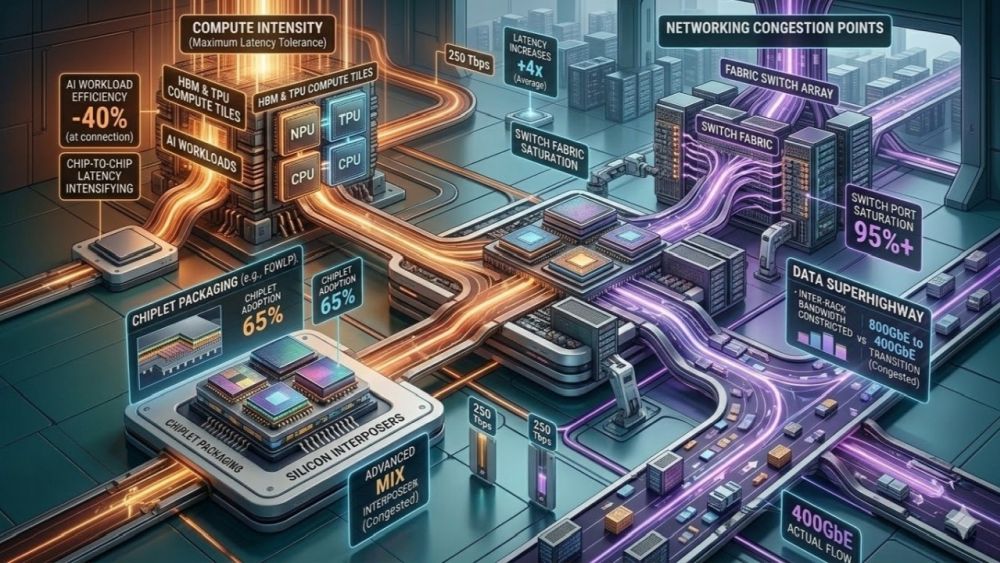
Yet the more immediate constraint may lie outside the chip. Huang acknowledged that power is now one of the major bottlenecks in the AI buildout, alongside land, construction, generator delivery, and grid connection. The bottleneck has shifted over time, from wafers and advanced packaging to memory, optics, connectors, and now electricity. Faster chips do not help much if a site cannot obtain enough power or connect to the grid in time.
Nvidia’s response at GTC Berlin was the DSX POD, a modular container-based design for complete Vera Rubin AI factories. Partners assemble and validate the systems before delivery, and Nvidia says a prepared site could bring one online in as little as 14 days instead of six months. That speed reduces the time expensive GPUs sit idle, but it does not solve the larger problem: utilities, cooling, permits, and grid capacity still take far longer to secure.
The question, then, is whether Huang’s financial vision can coexist with the physical limits of energy infrastructure. Longer GPU lives could improve the economics of AI data centers, while modular construction could cut deployment delays. But if power remains scarce, the industry may discover that the most valuable asset is not the GPU itself, but reliable access to the electricity needed to run it.

#AI #Nvidia #JensenHuang #GPUs #AIDataCenters #PowerBottleneck #AIInfrastructure #Compute #DSXPOD #Energy