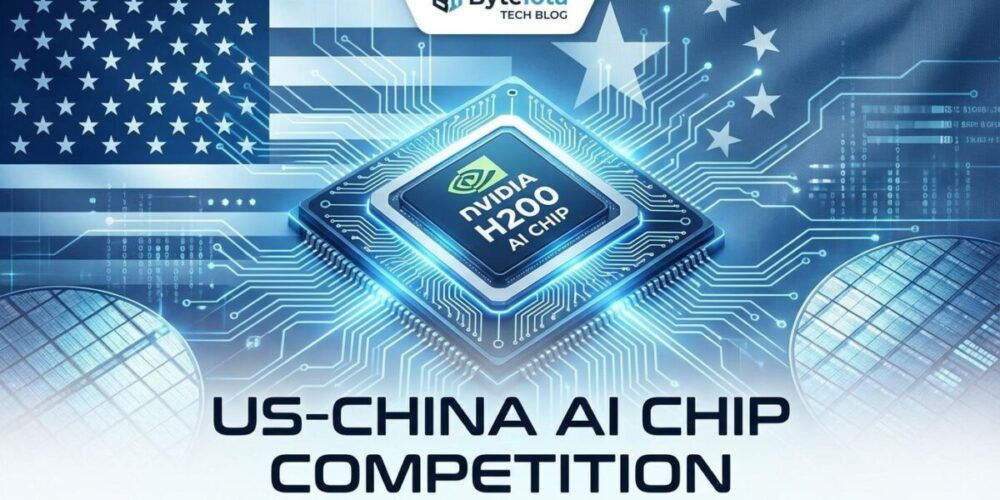
The promise of renewed AI chip trade between the United States and China is quietly unraveling. Despite Washington granting export licenses for Nvidia’s H200 processors to major Chinese tech firms, not a single shipment has crossed the border. What appeared to be a breakthrough now looks more like a controlled pause, shaped less by market demand than by political calculation on both sides.
Behind the scenes, Beijing has moved to slow the deal to a near standstill. Officials have warned domestic companies against relying on foreign semiconductors, reinforcing a broader strategy to build a self sufficient chip ecosystem. Reports of customs barriers and internal directives suggest that the hesitation is not merely caution, but a coordinated effort to redirect billions in potential spending toward local alternatives such as Huawei and other emerging players.
At the same time, U.S. regulations have introduced their own constraints. Chinese buyers must comply with strict usage rules, including assurances that the chips will not support military applications. Even more paradoxically, Washington requires these chips to remain within China, while Beijing encourages companies to deploy advanced hardware abroad. The conflicting conditions leave firms navigating a narrow and uncertain path, where compliance with one side risks violating the other.
Caught in this geopolitical crossfire, Nvidia finds itself unable to convert approvals into actual revenue. CEO Jensen Huang’s sudden appearance alongside President Trump in Beijing signals urgency, but also underscores how deeply commercial technology has become entangled with state power. What should have been a straightforward transaction now serves as a case study in how strategic rivalry can freeze even the most lucrative deals.

#Nvidia #ChinaTech #AIChips #USChina #Semiconductors #TechPolitics