
The global RAM shortage is no longer a supply-chain warning confined to chip executives. It is beginning to reshape the consumer hardware market, forcing manufacturers to reduce specifications, raise prices, and reconsider where their memory comes from. The central question is becoming harder to ignore: is the crisis merely a temporary consequence of the artificial intelligence boom, or is it accelerating a permanent shift in the balance of power among global chipmakers?
One revealing case is the relaunch of AOOSTAR’s NEX395 workstation. The AMD Ryzen AI Max+ 395 system originally offered 128 GB of LPDDR5X memory and 2 TB of storage, but the revised model provides only half those capacities. Its lower price may appear attractive, yet the downgrade exposes the pressure manufacturers face as memory costs rise faster than many premium product strategies can absorb.

That pressure has created an opening for ChangXin Memory Technologies, China’s largest DRAM producer. CXMT has expanded its share of the global market and begun appearing in laptops from major international brands. Its ambitions extend well beyond filling a temporary supply gap. The company is reportedly pursuing high-bandwidth memory production and targeting a much larger position in the DRAM industry before the decade ends.
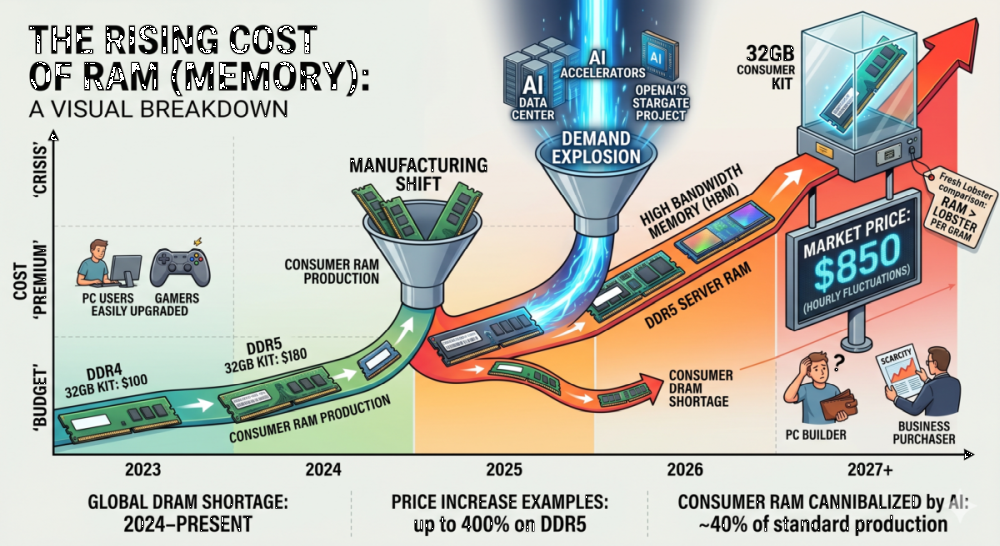
The consequences reach beyond corporate competition. South Korea’s dominant memory producers are facing a more assertive Chinese rival just as AI data centers consume an increasing share of available supply. For consumers, the result could be weaker configurations, higher prices, and slower product improvements across laptops, desktops, mini PCs, and gaming systems. If shortages persist through 2028, the RAMpocalypse may prove less like a cycle and more like a structural reset.

#RAMpocalypse #MemoryShortage #CXMT #DRAM #PCMarket #AIHardware #Semiconductors #ConsumerTech