
China’s humanoid robotics industry has produced a spectacle that would have sounded almost absurd only a few years ago: a machine running 100 metres faster than the fastest human ever officially recorded. The TianGong Ultra humanoid reportedly completed the distance in 8.64 seconds, surpassing Usain Bolt’s 9.58-second world record. Yet the headline number may be the least important part of the story. The real question is why Chinese developers are investing so heavily in making humanoid machines run, compete and operate in environments designed for humans.

The answer appears to be found in the extraordinary amount of experimentation taking place around these machines. Competitive events provide something laboratories cannot easily reproduce: thousands of robots repeatedly pushed to their physical limits under unpredictable conditions. Engineers can observe balance, acceleration, mechanical stress, battery performance, control systems and failures in ways that conventional demonstrations rarely reveal. A robot that falls during a race is not necessarily a failure. It can become a remarkably useful source of engineering data. The competition therefore starts to resemble a giant open-air robotics laboratory.
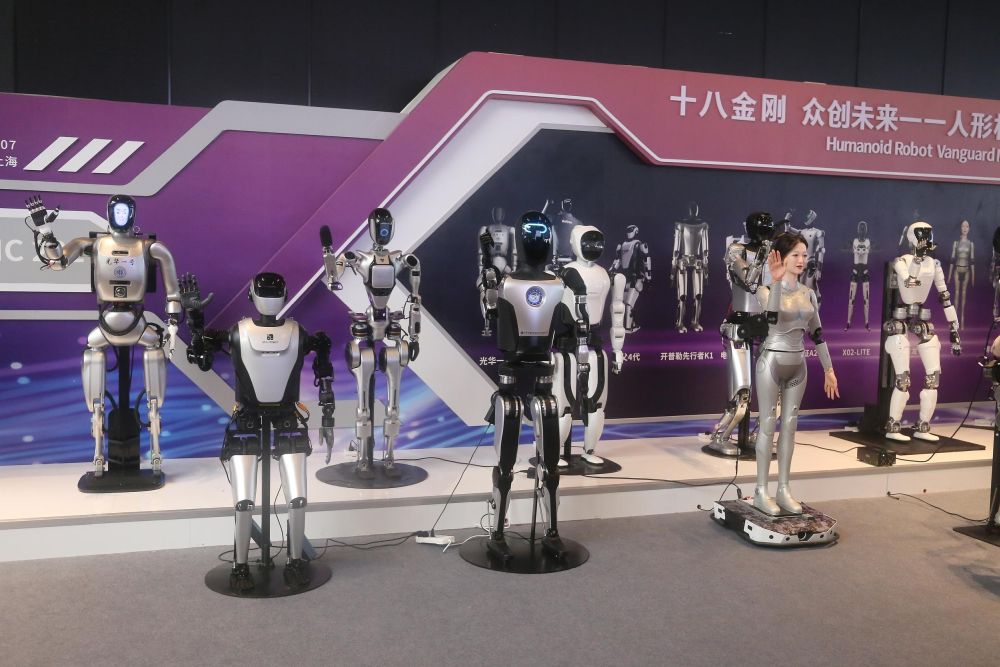
But speed also exposes an uncomfortable reality. Making a humanoid robot move quickly is one problem. Making it reliable enough to work for hours in a factory, warehouse or emergency environment is another altogether. High-speed movement introduces difficult problems involving stability, braking, energy consumption, actuator durability and real-time control. Every spectacular demonstration raises another question: can the same technology survive thousands of hours of repetitive work without constant human intervention? That transition from impressive prototype to dependable machine may ultimately determine which companies and countries emerge as leaders.
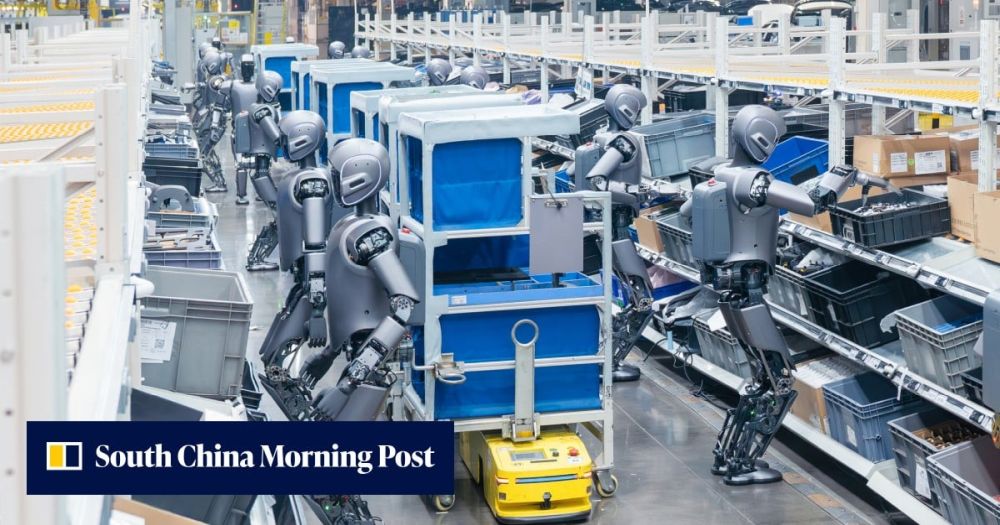
China’s broader robotics push suggests that the sprint is only one part of a much larger strategy. Humanoid robots are increasingly being developed for industrial production, logistics, inspection and eventually more difficult environments where conventional machines struggle. The fascinating possibility is that competitions such as these may accelerate progress by forcing developers to solve fundamental problems in locomotion, sensing and control much faster than traditional research programs would. The robot that beats a human over 100 metres makes a spectacular headline. The machine that quietly works eight hours a day, understands its surroundings and recovers when something goes wrong could prove far more consequential.

#HumanoidRobots #Robotics #China #ArtificialIntelligence #Automation #Technology #AI #FutureOfWork #RoboticsInnovation #Engineering