
What if the next great mathematical insight does not come from a tenured professor, but from a doctor running a chatbot overnight? A neurosurgery resident in Beijing recently used an AI assistant to solve Crouzeix’s conjecture, a problem that had resisted attack since 2004. The model worked autonomously for sixteen hours and returned a complete proof, one that seasoned specialists later confirmed as correct. The researcher had no formal training in the field, yet the collaboration between human curiosity and machine persistence closed a gap that had frustrated experts for more than two decades.
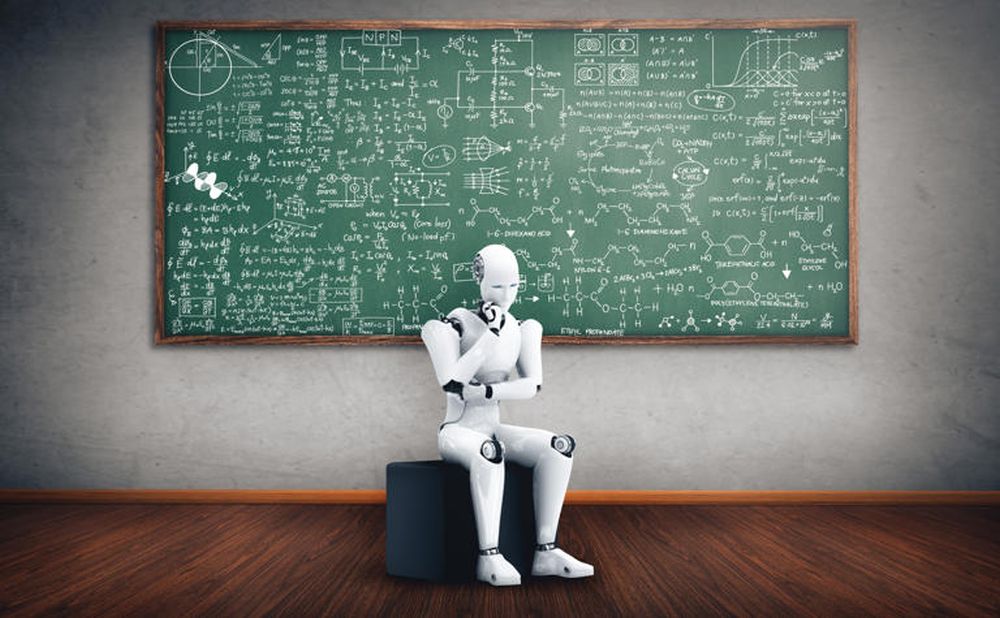
At the same time, another AI effort pushed further into the orbit of the Riemann hypothesis, that towering unsolved question about the distribution of prime numbers. A research version of a leading model coordinated dozens of its own copies and, after testing hundreds of ideas, improved a long-standing bound tied to the hypothesis. The result does not settle the conjecture, but it marks the most significant progress on this front in years and suggests that AI can navigate the deepest layers of number theory with growing competence.
These are not isolated flashes. Earlier in the year, an internal model at a major AI lab disproved a conjecture from 1945 about unit distances in the plane. Soon after, the same lab published a catalog of advances across mathematics and computer science produced by its systems. The pace is accelerating, and the pattern is hard to ignore. What once seemed like a distant promise is now a steady stream of peer-reviewed breakthroughs, each one tightening the link between artificial intelligence and pure discovery.
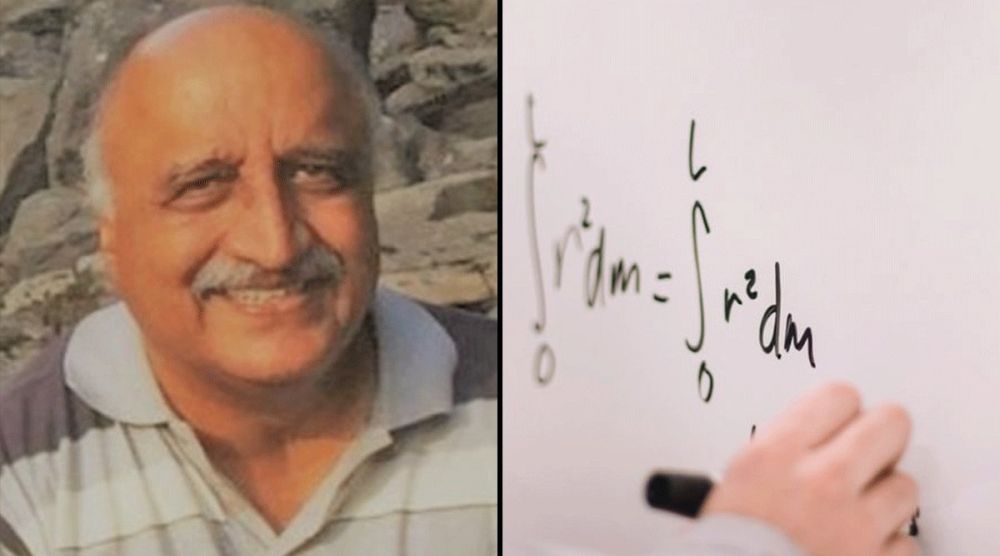
So what does this mean for the future of research? It hints at a new kind of partnership, where AI acts less like a calculator and more like a tireless co-author, proposing strategies, checking edge cases, and stitching together arguments that humans can then refine and verify. The tools are becoming trustworthy enough to hand over open-ended problems and wait for something novel to emerge. If this trajectory holds, the next decade could reshape how mathematics grows, who gets to contribute, and how quickly the frontier moves.

#AI #Mathematics #RiemannHypothesis #CrouzeixConjecture #Research #Breakthrough #MachineLearning #NumberTheory #LinearAlgebra #FutureOfScience